
Nose surgery
Nose surgery corrects the shape, size and function of the nose. An individual plan, open or closed technique and a natural result that breathes well.
Nose surgery (rhinoplasty) is one of the most common procedures in plastic surgery. Its aim is to bring the shape of the nose into harmony with the rest of the face and, where needed, to improve how it works. Every change is planned individually so that the result looks natural and stays stable in the long term. Surgery can adjust the size, shape and proportions of the nose: it can make the nose smaller or larger, correct the shape of the tip, straighten the septum or change the width and shape of the nostrils.
What nose surgery can correct
Nose surgery can help if you are bothered by:
- A pronounced bony hump on the bridge of the nose
- A nose that is too wide or too narrow
- An asymmetric or poorly defined tip
- A nose out of proportion with the rest of the face
- A deviated septum causing breathing problems
When planning the operation we always focus not only on appearance but also on preserving or improving breathing through the nose.
If you do not want to undergo classic nose surgery, there are minimally invasive alternatives too. For example, the tip of the nose can be adjusted — lowered or lifted — with BTX, which relaxes the muscles that pull the tip down or make it “wrinkle” when you make facial expressions. BTX can likewise treat mild nose wrinkling or gently soften dynamic changes on the bridge of the nose. This treatment is quick, less expensive and needs no recovery time.

The operation
Nose surgery is performed either under analgosedation or general anaesthesia, depending on the extent of the procedure and what we agree with you. Under analgosedation you are awake and relaxed and feel no pain. Under general anaesthesia you sleep through the whole operation.
Surgically, an open or a closed technique is used. The open technique allows very precise shaping of the nasal framework: the skin of the nose is temporarily lifted off its supporting structure, which is then shaped as required. The closed technique uses incisions inside the nostrils and leaves no visible scars.
When correcting the so-called soft nose, the surgeon works mainly with the cartilage of the tip, which is partly reshaped and reassembled into a natural, stable form. With the so-called hard nose, the bony hump is corrected and the bridge is narrowed and lowered to achieve balanced proportions.
Aftercare and healing
After the operation the nose is held in a thermoplastic splint that stabilises its new shape, and the nasal cavities are packed:
- The packing is usually removed after 2 days
- The splint comes off around day 10 after the operation
The procedure involves an overnight stay at the clinic, under the supervision of experienced medical staff. Recovery takes around 3 weeks.
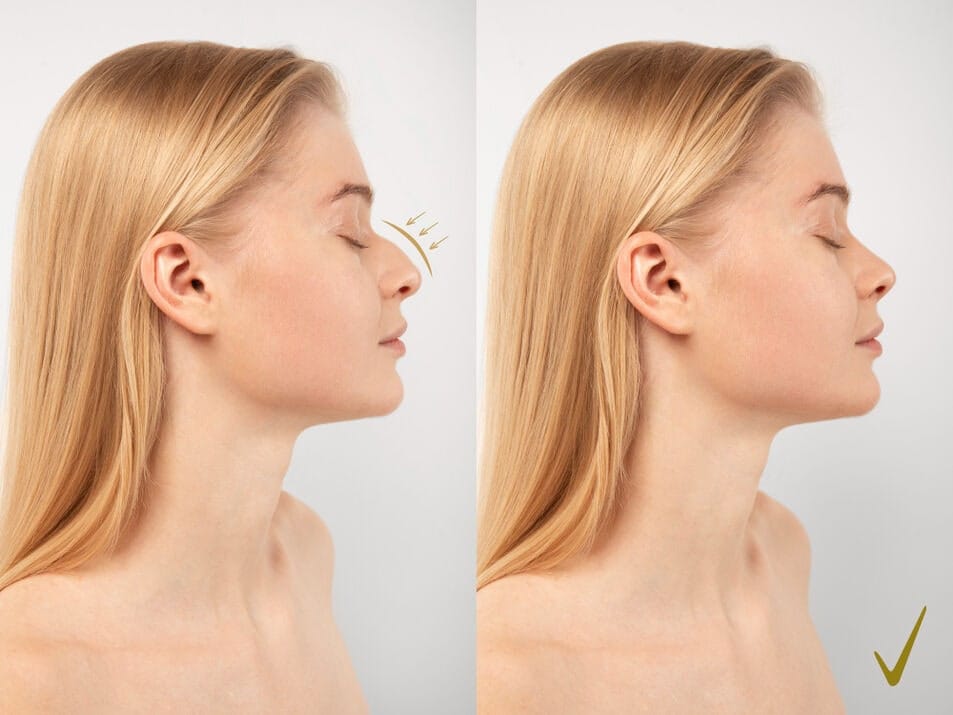
An individual approach and a natural result
Every nose surgery is carefully planned around your individual anatomy, health and personal expectations. We do not aim to change your face radically, but for a harmonious, natural-looking result that respects the proportions of your face, keeps its character and works properly for breathing.
At a personal consultation we will go through everything with you in detail and in plain language. We will explain the options, recommend the most suitable approach for your situation and together set realistic expectations for the result.
Consultation
Send us a message and we usually reply within one working day.