

Skin rejuvenation and regeneration
How to look younger
The desire to look fresh and youthful is not only about fighting wrinkles. It is about the overall i...
Proper skin care consists of four basic steps: cleansing, moisturizing, sun protection, and regular exfoliation. These steps apply to every skin type, only the choice of products and frequency of use differ. Without this foundation, neither expensive serums nor professional treatments will bring long-term positive results. Skin care is not about the quantity of products. It is about their correct selection and consistent use.
Cleansing your skin twice a day is the basis of any care. In the morning, you will rid your skin of sweat and sebum that has accumulated overnight. In the evening, you will remove makeup, dirt and oxidized sebum from the whole day.
The choice of cleanser depends on your skin type. Oily and combination skin benefits from a gel or foam with a slightly acidic pH. Dry and sensitive skin responds better to milk or micellar water supplemented with a sulfate-free cleansing gel. Soaps with a high pH disrupt the skin barrier.
Cleansing should not last longer than 60 seconds. A longer massage with a cleanser will irritate the skin unnecessarily. After rinsing, use a clean towel, never use shared textiles that transmit bacteria.
Practical recommendation: Evening cleansing is more important than morning cleansing. If you only have time for one step, do it in the evening.
The correct procedure consists of two steps. The first is the use of substances that help bind water in the skin and maintain its hydration, the second are preparations that limit water evaporation and support the skin barrier. Hyaluronic acid belongs to the first group, ceramides and squalene to the second. A quality hydration routine includes both.
A serum with hyaluronic acid is applied to slightly damp skin immediately after cleansing. Hyaluronic acid binds water, so the effect of the cream may not last on dry skin without sufficient hydration. A moisturizing cream or fluid is applied as the second step and seals the water in the skin.
Oily skin needs hydration just as much as dry skin. Skipping hydration with oily skin leads to even higher sebum production, as the skin resists overdrying. A light gel or fluid without oils is the right choice for oily skin.
Practical recommendation: Look for products containing hyaluronic acid, ceramides, niacinamide or squalane. These ingredients are among the well-researched and functional moisturizing active ingredients.

SPF, or sun protection, is the most scientifically proven anti-aging product. UV radiation causes up to 80 percent of visible skin aging, including wrinkles, age spots, and loss of elasticity.
SPF 30 or higher should be part of your morning routine every day, year-round. Apply as the last step of your skincare routine, before makeup. The amount is about a quarter of a teaspoon to your face and neck.
Chemical filters are lighter and don't leave a white cast. Mineral filters based on zinc oxide are suitable for sensitive or acne-prone skin. Both types provide effective protection if you apply enough.
Practical advice: If you want to address age spots or slow down aging, there's no point in investing in other products without daily SPF.
Exfoliation removes dead cells from the surface of the skin and accelerates cell renewal. The result is a more even tone, smoother texture and better absorption of other products.
Chemical exfoliation using acids is in most cases more even and gentler than mechanical peeling. Glycolic or lactic acid (AHA acids) even out the tone and hydrate. Salicylic acid (BHA acid) cleanses pores and is suitable for oily and acne-prone skin.
The frequency depends on the concentration of the product and skin type. Low concentrations of AHA or BHA acids can be used every day or every other day. Higher concentrations and peels are enough once or twice a week. If your skin is hypersensitive or irritated, reduce the frequency.
Practical recommendation: Always apply moisturizer and SPF after exfoliation. Exfoliated skin is more sensitive to UV radiation.
Oily skin produces excessive sebum, has enlarged pores and is prone to acne. The basis is a gel cleanser, light oil-free hydration and salicylic acid to cleanse pores. SPF in gel or fluid form does not leave a greasy film.
Dry skin tightens, peels and reacts poorly to more aggressive products after cleansing. It needs creamy cleansers, richer hydration with ceramides and squalane and avoiding alcohol-based toners.
Sensitive skin may react with redness, burning or itching when switching to new products or when changing your routine. Products with a simpler composition without perfumes, alcohol and strong acids are more suitable. Introduce new products gradually, only one product per week.
Combination skin combines an oily T-zone with a normal or dry U-zone. Choose products according to the dominant problem and combine different products if necessary.
Practical recommendation: Skin type changes with age, season and hormonal fluctuations. Adapt your routine to the current condition, not just the original diagnosis.

Home care is the foundation, but it has its limits. If age spots, acne scars, significant wrinkles or loss of skin firmness do not improve even after three months of consistent care, professional treatment will take the results to another level.
Aesthetic medicine offers treatments that home products cannot replace. Deep hydration using bioremodeling or biostimulation restores skin quality from within. Hyaluronic acid injections replenish volume where it is naturally lacking and restore hydration in the deeper layers of the skin, where classic products cannot reach. BTX applications address mimic wrinkles that creams do not affect.
A consultation with our doctor is the first step. Based on this, you will receive a care plan tailored to your skin condition, combining a home routine with professional treatments.
Practical recommendation: The most effective approach combines high-quality home care with regular professional treatments.
In your 30s, it’s time to add a vitamin C serum to your routine. Vitamin C protects against UV damage and evens out your skin tone. Retinol speeds up cell renewal and stimulates collagen production. SPF 30 or higher, every day, is a must. A preventative approach in your 30s can significantly slow down visible aging in the decades to come.
Acne-prone skin needs gentle cleansers without harsh sulfates, salicylic acid to unclog pores, and light, oil-free moisturizers. If adult acne persists, it’s a good idea to see a doctor.
Sensitive skin needs a minimalist routine with a reduced number of ingredients. Look for products without perfumes, alcohol, and strong acids. Panthenol, allantoin and ceramides soothe and strengthen the skin barrier. Always introduce new products gradually, only one product per week, to identify any reactions.
Apply SPF as the last step of your morning skincare routine, before applying makeup. Use about a quarter teaspoon on your face and neck. Reapply every two hours when outdoors.
Hydration and texture improvement are noticeable within two to four weeks. Even skin tone and reduction of age spots take eight to twelve weeks. Results are based on consistency, not speed.
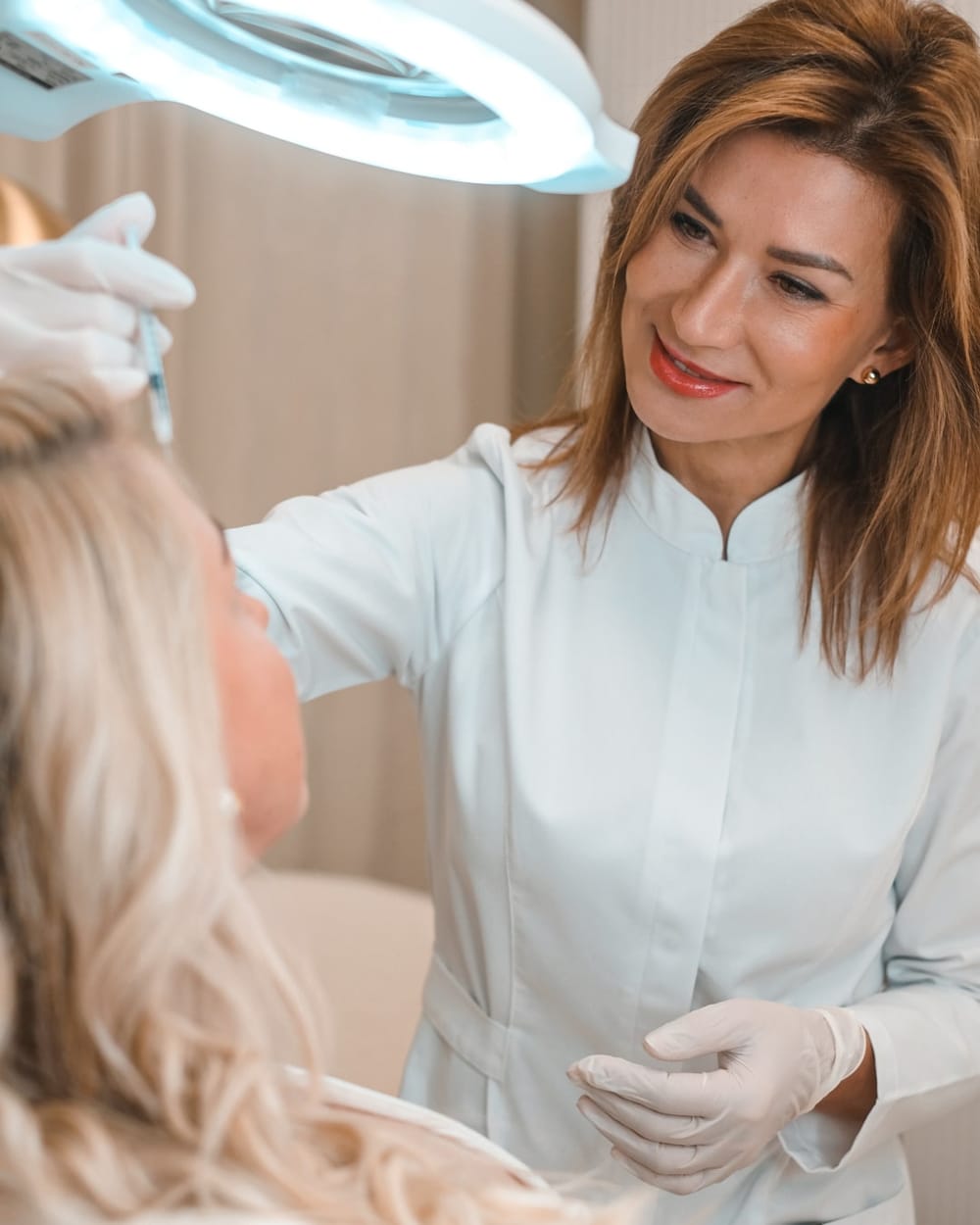
Functional skincare is built on four pillars: cleansing, moisturizing, SPF, and exfoliating. Consistency is more important than the price of the products or the length of the routine.
If home care is not enough or you are looking for a more effective way to healthy and radiant skin, professional treatments at Hello Beauty Clinic are the ideal choice. A free consultation will help you set up a treatment exactly for your skin type and your goals.
The desire to look fresh and youthful is not only about fighting wrinkles. It is about the overall i...
Sunken cheeks are among the common signs of facial ageing, yet people talk about them less than abou...
Uneven skin surface, visible wrinkles or loss of elasticity are among the most common reasons why people seek aesthetic medicine. Today, several injectable methods offer...
Send us a message and we usually reply within one working day. Consultations are free.