
Body care
Gift vouchers for aesthetic treatments – Christmas ideas by budget
Christmas is a time of joy and wishes come true – and a gift that keeps giving long after it is unwrapped is a little self-care...
A lump in the groin that grows when you cough or strain and shrinks or disappears when you lie down may be a sign of an inguinal hernia. It is one of the most common types of hernia, and it does not heal on its own. We explain how to recognise an inguinal hernia, when it can be dangerous and how an ultrasound examination helps to detect it.
An inguinal hernia develops when part of the contents of the abdominal cavity, most often fat or a loop of bowel, bulges through a weak spot in the area of the inguinal canal. On the outside it shows as a soft bulge in the groin that changes with body position and with pressure in the abdomen.
The inguinal canal is a naturally weaker spot in the abdominal wall. In men the spermatic cord runs through it, in women the round ligament of the uterus. Doctors distinguish two main types of inguinal hernia. An indirect hernia passes through the inguinal canal and is linked to a congenital predisposition. In men it can descend into the scrotum. A direct hernia pushes through the weakened back wall of the canal and tends to appear later in life. It descends into the scrotum less often.
A hernia is caused by a combination of weakened tissue and repeatedly raised pressure in the abdomen. Lifting heavy loads, a chronic cough, long-term constipation or excess weight all contribute to it. Inguinal hernias affect men far more often than women.
Summary: An inguinal hernia is a bulge of abdominal contents through a weak spot in the groin, usually caused by a combination of weaker tissue and raised pressure inside the abdomen.

The most typical symptom of an inguinal hernia is a soft lump in the groin that grows when you stand, cough or strain and shrinks or disappears completely when you lie down. It is often accompanied by a feeling of pressure, pulling or burning in the groin.
The lump at first appears only now and then, typically at the end of the day or after physical exertion. Gradually it grows and becomes noticeable more often. In men it can descend into the scrotum.
In women the symptoms are often less obvious. The lump tends to be smaller, and groin pain is easily mistaken for a gynaecological or muscular problem. That is why hernias in women are often discovered later.
The most common signs include:
Summary: A lump that changes with your position and with pressure in the abdomen is the clearest sign of a hernia and a reason to have it examined.
A strangulated hernia is an acute condition in which the contents of the hernia become trapped and cannot be pushed back into the abdomen. The blood supply to the bowel may be cut off, so in that case call 155 (or 112) or go straight to a surgical emergency department.
The warning sign is a lump that suddenly becomes hard, very painful and does not go away when you lie down or press on it gently. The skin over it may turn red. Nausea, vomiting and a bloated abdomen often follow. Never put these symptoms off, and do not try to force the hernia back in.
Summary: A hard, painful lump that cannot be pushed back, together with nausea or vomiting, needs immediate medical help.

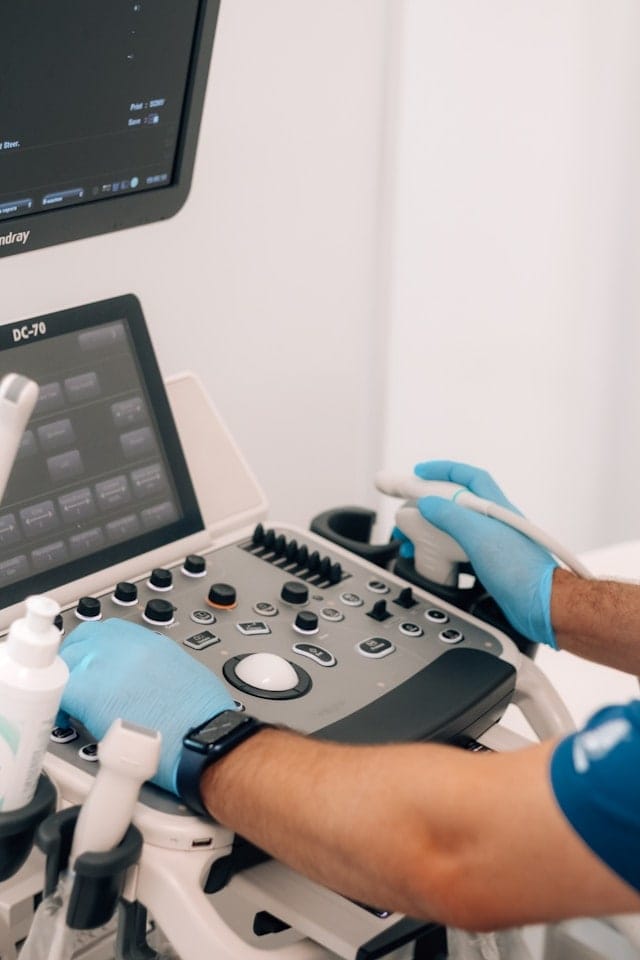
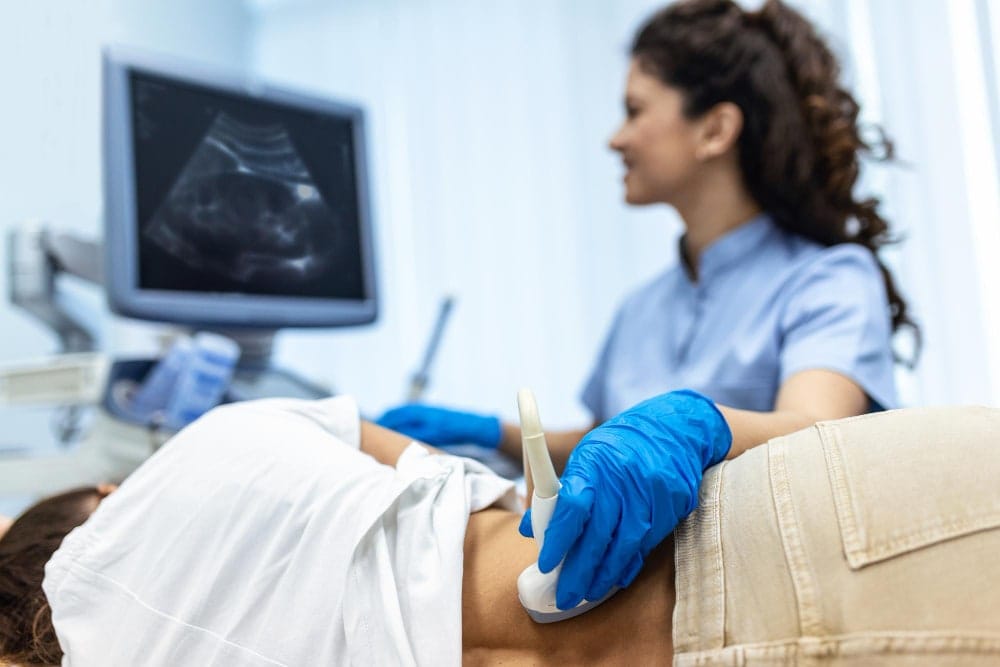
A groin ultrasound is a quick and painless method that reliably shows the hernia, determines its size and distinguishes it from other masses in the groin. The examination involves no radiation and needs no preparation.
A great advantage of ultrasound is that the examination is dynamic. The doctor watches the groin while you lie down and while you stand, and asks you to bear down or cough. When the pressure in the abdomen rises, the hernia bulges out and is clearly visible on the screen. That is why ultrasound picks up even small hernias that cannot be felt during an ordinary physical examination.
Ultrasound also distinguishes a hernia from other causes of swelling or pain in the groin, for example an enlarged lymph node, a lipoma, a cyst or a pulled muscle. This matters, because each of these findings calls for a different approach.
Summary: A groin ultrasound confirms a hernia even when it cannot be felt, and helps to tell it apart from other masses in the groin.
An inguinal hernia does not heal on its own, and if it causes trouble, the right treatment is surgery. Whether and when to operate is decided by a surgeon according to the size of the hernia, your symptoms and your overall health.
For small, uncomplicated hernias the surgeon sometimes recommends regular monitoring. Painful, growing or repeatedly bulging hernias are operated on as a planned procedure, before strangulation becomes a risk. The operation is done either as traditional open surgery or laparoscopically through small incisions.
A hernia belt or truss will not cure a hernia. It only eases the symptoms for a while, for example until a planned operation. After surgery most patients return to their normal activities within a few days; heavy lifting has to wait several weeks, as advised by the surgeon.
An inguinal hernia is a common problem that will not go away on its own, but when it is caught early it is readily treated. If you feel a lump, pressure or pain in your groin when you exert yourself, do not wait for the problem to get worse. A groin ultrasound quickly confirms whether it is a hernia or a different finding, and gives you a clear basis for what to do next. We carry out the examination at our clinic in Pilsen, no referral needed.
The typical sign is a soft lump in the groin that grows when you stand, cough or lift and disappears when you lie down. It is often accompanied by pressure or burning in the groin. Self-examination cannot replace a doctor, though; only a groin ultrasound gives you certainty.
In women the symptoms tend to be less pronounced. The lump is often smaller, and the main sign is pain or pressure in the groin, especially during exertion.
Yes. During a dynamic examination the doctor watches the groin while you lie down, while you stand and while you bear down. The hernia bulges out when the pressure in the abdomen rises, and the ultrasound picks it up even when it cannot be felt during a physical examination.
No, an inguinal hernia does not heal on its own. A hernia belt only eases the symptoms for a while. For small, uncomplicated hernias the surgeon sometimes recommends monitoring, but only surgery provides a permanent solution.
The examination takes about ten to twenty minutes and needs no preparation. We tell you the result straight after the examination and recommend what to do next.
Christmas is a time of joy and wishes come true – and a gift that keeps giving long after it is unwrapped is a little self-care...
Most lumps under the skin are benign, but their nature cannot always be reliably determined by touch...
Ultrasound examination is one of the safest and most accessible diagnostic methods in modern medicine. It does not burden the body with radiation, it is painless and you know...