
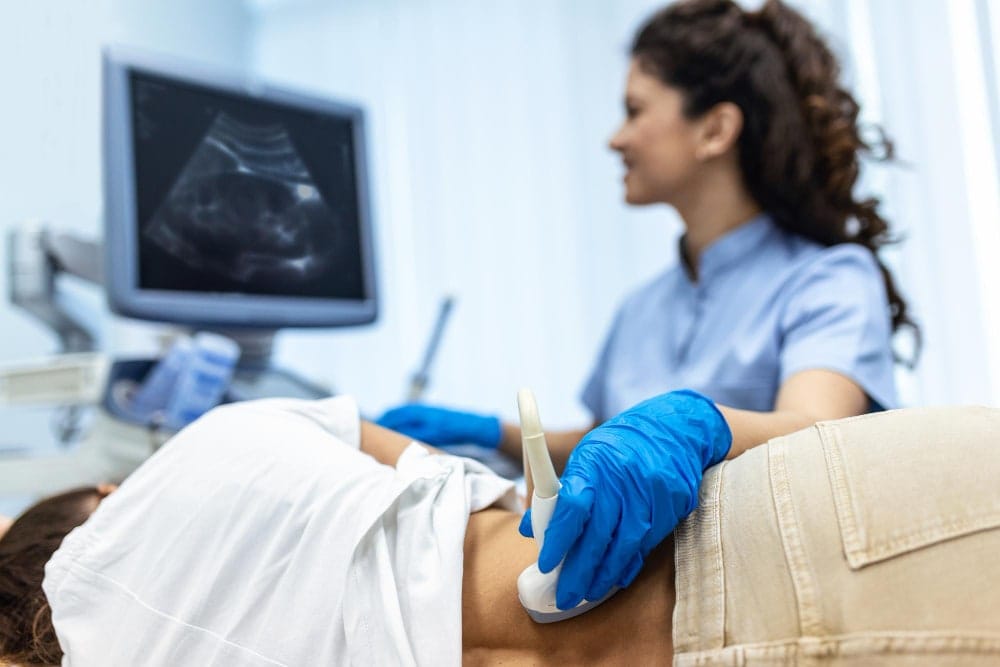
Examination by ultrasound
Ultrasound
Ultrasound examination is one of the safest and most accessible diagnostic methods in modern medicine. It does not burden the body with radiation, it is painless and you know...
Most lumps under the skin are benign, but their nature cannot always be reliably determined by touch alone. If a lump appears for the first time, grows or changes, have it examined by a doctor.
A hard lump under the skin is a palpable mass (swelling) that has formed from fatty, fibrous, glandular or lymphatic tissue. It can be mobile or fixed to the tissue beneath, painful or painless, as small as a pea or sometimes even larger than a walnut.
The subcutaneous tissue contains fat, connective tissue, blood vessels, nerves, sebaceous glands and lymph nodes. A change in any of these structures can show up as a lump. That is why lumps vary in appearance and firmness and cannot be told apart just by looking at them. It is important to watch how quickly the lump grows, whether it moves under your finger and whether other symptoms accompany it – for example a change in the colour of the surrounding skin, or abnormal contents leaking out through the skin.
The most common causes are a lipoma (fatty lump), an atheroma (blocked sebaceous gland), a dermatofibroma and an enlarged lymph node. Some of these growths are benign and need no treatment, but others, including enlarged lymph nodes, can signal a serious illness.
A lipoma is usually soft, moves freely over the tissue beneath and grows slowly. An atheroma tends to be round and firm and slides easily under the skin. It often has a tiny black dot on its surface. A dermatofibroma shows up as a hard, flat nodule in the skin. A lymph node becomes enlarged during an infection, when it is usually tender to the touch, but it may not be tender at all, and its enlargement can be linked to a serious illness.
Less often it is a ganglion near a joint, a haematoma after an injury, an abscess or another inflammatory growth. Rarely, a hard lump can hide a malignant disease, which is why an examination matters even when you feel it is nothing.
See a doctor as soon as possible if the lump is growing, especially if it is hard and immobile, if it changes the colour of the skin or does not heal. The same applies if it comes with a fever, night sweats or weight loss for no obvious reason.
The warning signs at a glance:
If none of this applies but the lump worries you, book an appointment anyway. Only a doctor can assess it reliably.
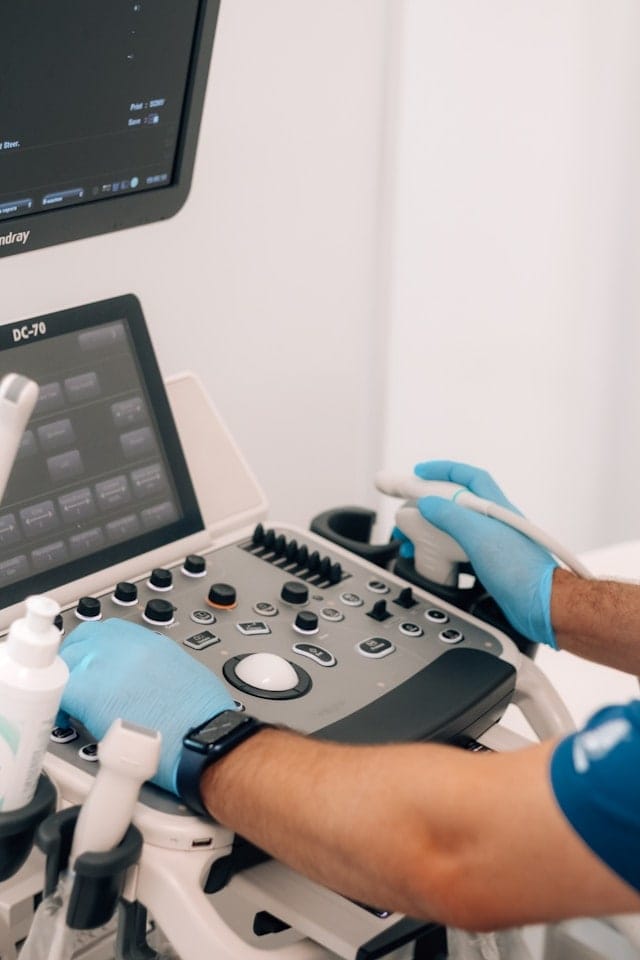
A soft tissue ultrasound helps determine the size, location and structure of the lump and tell, for example, a cyst from a solid mass. A Doppler examination can also assess its blood supply. The results help the doctor decide whether to monitor the lump or recommend further tests.
The method is painless, involves no radiation and needs no preparation. The examination can be repeated at any time, which is useful when following how a finding develops. The ultrasound shows whether a lymph node has a normal structure and helps in planning any procedure.
It is important to know, however, that ultrasound does not replace a histological examination. With unclear findings the doctor adds a biopsy, because the definitive diagnosis is made only by examining the tissue under a microscope.
Do not squeeze it, prick it or try to remove it yourself. You could damage the surrounding tissue, cause an infection or make any inflammation worse.
Treatment depends on the type of growth. Smaller benign lumps that cause no trouble are often just monitored; painful, growing or cosmetically bothersome growths are removed with a minor surgical procedure.
The procedure is usually done as an outpatient under local anaesthetic and typically takes a few minutes. The removed tissue is usually sent for histological examination, which determines its nature. Inflammatory growths and abscesses sometimes require drainage or antibiotics. Once a lump has been removed properly, the risk of it coming back is low in most cases.
A hard lump under the skin is often harmless, but this cannot always be told without an examination. Watch how quickly it grows, whether it hurts and whether other symptoms accompany it. If the lump worries you or shows any of the warning signs, do not put off seeing a doctor. A soft tissue ultrasound is a quick and painless way to help find out what the lump is made of and what to do next.
Most lumps under the skin are benign. However, the nature of a growth usually cannot be determined by touch and appearance alone. Always have fast-growing, hard and immobile lumps examined by a doctor.
A lipoma is usually soft, slightly mobile and grows slowly. These signs, however, cannot reliably confirm or rule out a diagnosis. If you are not sure where a lump comes from, have it examined by a doctor.
If you do not know what caused it, consult a doctor, especially if it lasts longer than two weeks. With rapid growth, redness, significant pain or other warning signs, see a doctor sooner.
No, the examination is painless. The doctor places a probe with gel on the skin; occasionally you may feel slight pressure on a tender spot. The examination itself takes a few minutes and needs no preparation.
Yes, a minor outpatient procedure under local anaesthetic removes most benign lumps. It is done if the growth hurts, grows or bothers you cosmetically.
Ultrasound examination is one of the safest and most accessible diagnostic methods in modern medicine. It does not burden the body with radiation, it is painless and you know...
Excessive sweating of the whole body is not only an aesthetic problem. It can make our daily life, both personal and social, uncomfortable. It also very often leads to...
Proper skin care consists of four basic steps: cleansing, moisturizing, sun protection, and regular exfoliation. These steps apply to every skin type, only the choice of...