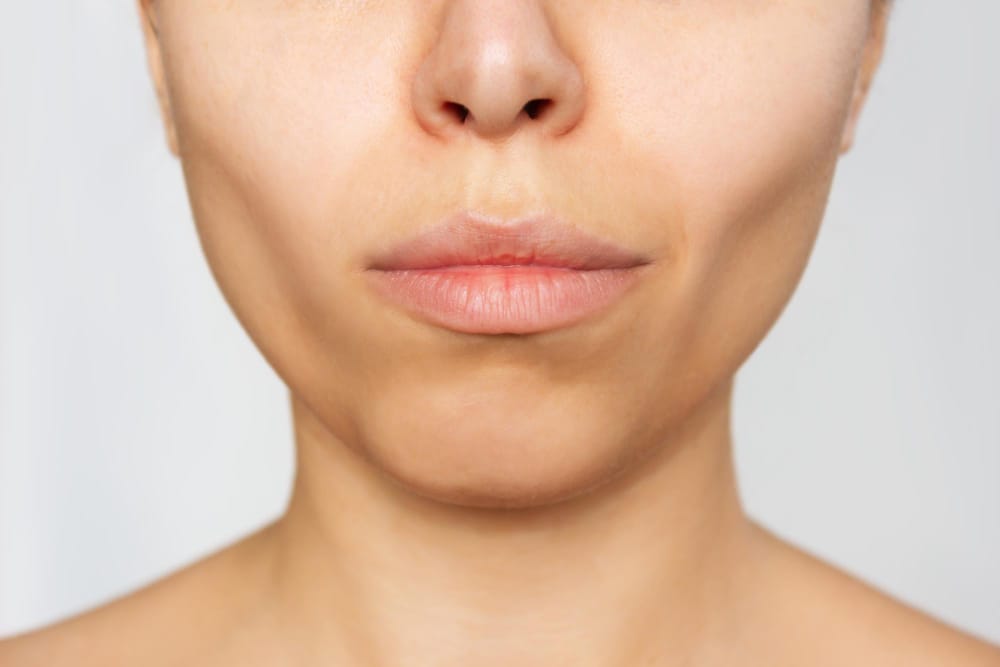

Facial Shaping
Lip flip - fuller lips without filler
Longing for fuller lips but worried about an injectable filler? A lip flip is a gentler solution. BT...
Have you noticed that your face is gradually losing its sharpness and your jawline is not as defined as it used to be? Facial contour modeling addresses exactly this: it restores lost lines and gives the face back a clear, defined shape.
Facial contour modeling is an aesthetic procedure that restores and refines the lines of the face with hyaluronic acid fillers or biostimulating substances. The aim is to define the cheekbones, jaw, chin and the transitions between them so that the face looks harmonious.
Unlike adding volume across a whole area, contour modeling works with specific lines and angles. The doctor places the filler precisely along the anatomical points that determine how we see a face from the front and in profile. The result is a sharper facial contour without changing the face's basic character.
Summary: Contour modeling targets specific lines of the face, not an overall increase in volume.

Well-defined facial contours at a younger age depend on the bone structure, the distribution of the fat compartments and the elasticity of the skin. With age, all three gradually weaken.
The fat pads shift downwards, the bone structure loses volume and the skin loses elasticity. The result is a less defined jawline, less prominent cheekbones and an overall softer, less defined facial profile. This process begins gradually as early as around the age of thirty and becomes more pronounced over time.
Summary: Losing facial contour is a natural process that combines a loss of tissue volume with a loss of skin firmness.
Contour modeling most often focuses on the cheekbones, the jawline, the chin and the transition between the face and the neck. Each of these areas plays a different role in the overall appearance of the face.
Filler placed in the cheekbone area accentuates their upper edge and visibly lifts the face. Jawline contouring sharpens its line and restores the crisper transition between the face and the neck that often fades with age. Chin augmentation adds volume where a receding chin is out of proportion with the rest of the face, improving the profile. Combining these treatments gives the most visible and most harmonious result.
Facial contour modeling most often uses more cross-linked (denser) types of hyaluronic acid, complemented by biostimulating products where needed. The choice of substance depends on the effect we need to achieve in the treated area.
Denser fillers are used in the cheekbone and jaw area, where they hold their shape and support the surrounding tissue. Biostimulating products also stimulate the production of your own collagen, so the result gradually strengthens over the weeks after the application.
Summary: The choice of material always depends on the specific area treated and the desired effect. The approach is not the same for every client.

The consultation before contour modeling begins with a detailed analysis of the face, in which our doctor assesses the proportions, any asymmetries and the areas that have lost volume. Based on this analysis she designs an individual treatment plan.
The procedure itself takes about 15 to 30 minutes, depending on the extent of the treated areas. The filler is applied with a fine cannula or needle at predetermined points, and the doctor continuously checks the symmetry and the smoothness of the transitions between areas. More sensitive clients can ask for a numbing cream before the procedure.
Summary: The procedure is based on a careful analysis of the face, without which a naturally balanced result cannot be achieved.

Contour modeling suits clients who notice their cheekbones becoming less prominent, a less sharp jawline or a receding chin. It is suitable both for clients whose face is showing signs of ageing and for those who simply want to accentuate the natural lines of their face and show no signs of ageing.
The procedure is not recommended during pregnancy and breastfeeding, with an acute skin infection in the treated area or with an allergy to the substance used. That is why there is always a consultation beforehand, at which the doctor assesses your health and proposes a safe approach.
Facial contour modeling can give the face back a clear line and harmonious proportions without surgery. It works specifically with the cheekbones, jaw and chin so that the result looks natural and harmonious, not just like added volume. If you notice that your face is gradually losing definition and contour, book a free consultation. The doctor will assess your proportions and recommend an approach that suits your needs.
Contour modeling targets specific lines of the face and works with the overall shape of the face. A classic wrinkle filler, on the other hand, treats individual surface lines. The two methods can be combined.
The procedure is well tolerated, but you can ask for a numbing cream before the application. Mild redness or tenderness may appear after the procedure and fades within one to two days.
The result is visible immediately after the procedure, but the final shape settles once the initial swelling has gone down.
Yes, the method is also used preventively or simply to accentuate the natural lines of the face, with no connection to ageing. In that case it is more an aesthetic adjustment of proportions than a correction of lost volume.
Longing for fuller lips but worried about an injectable filler? A lip flip is a gentler solution. BT...
The desire to look fresh and youthful is not only about fighting wrinkles. It is about the overall i...
Sunken cheeks are among the common signs of facial ageing, yet people talk about them less than abou...
Send us a message and we usually reply within one working day. Consultations are free.